How to cut a perfectly square hedge with a $5 string line.
No laser levels, no thousand-dollar gear, no guesswork. The trick behind every dead-straight hedge you have ever envied is a piece of string pulled tight, the same method bricklayers have used for centuries. Here is exactly how to set it up, from a bloke who cuts hedges around Geelong for a living.
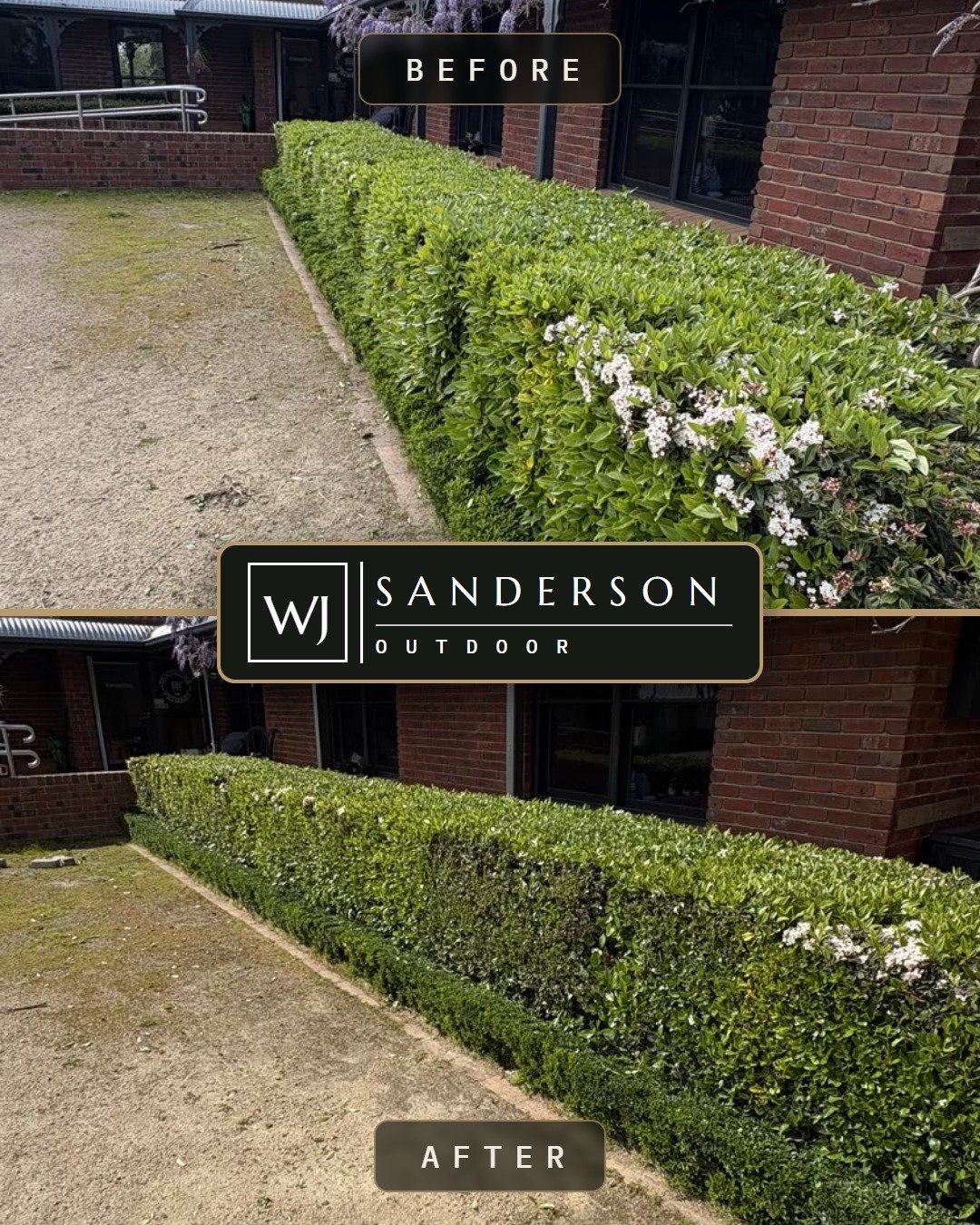
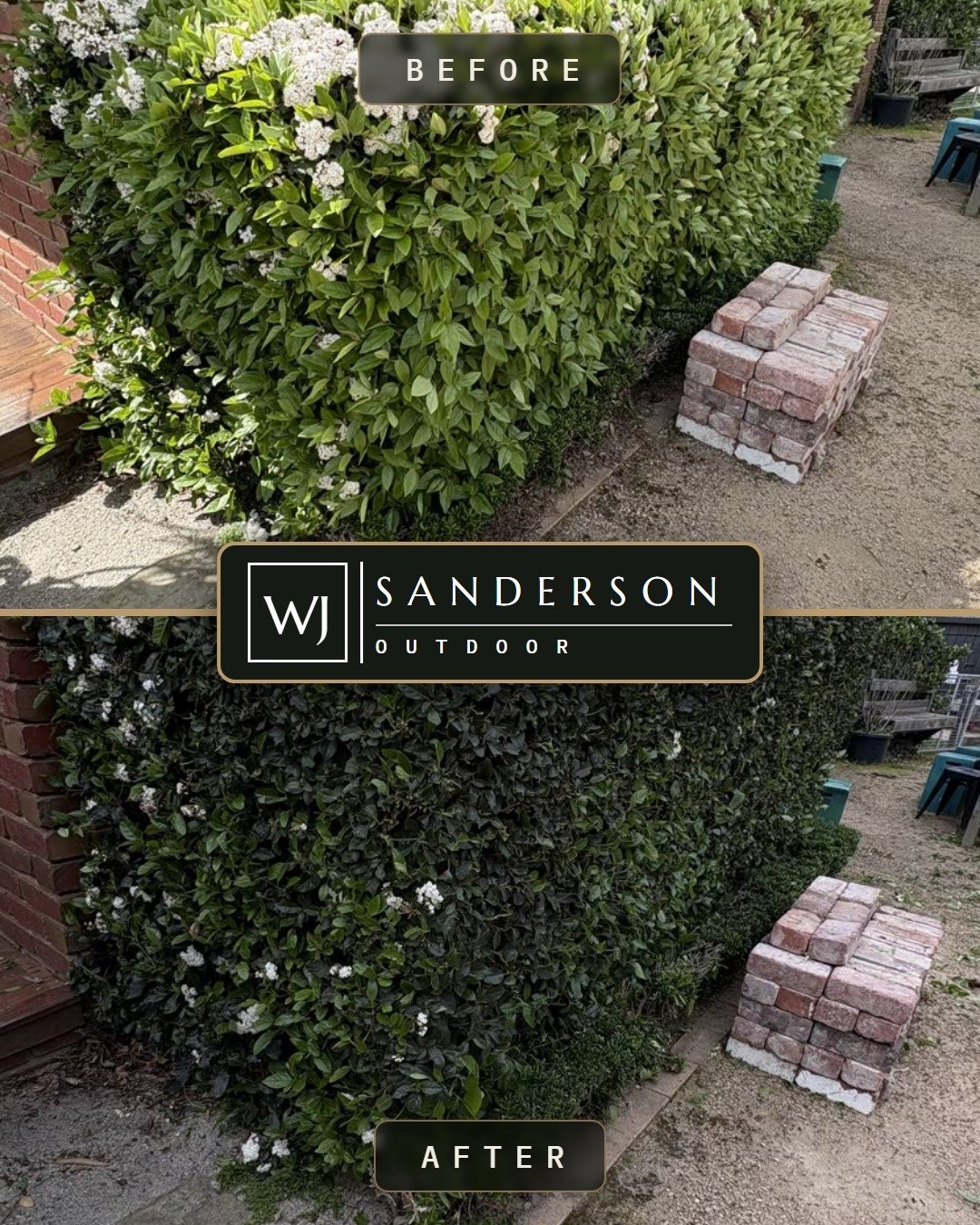
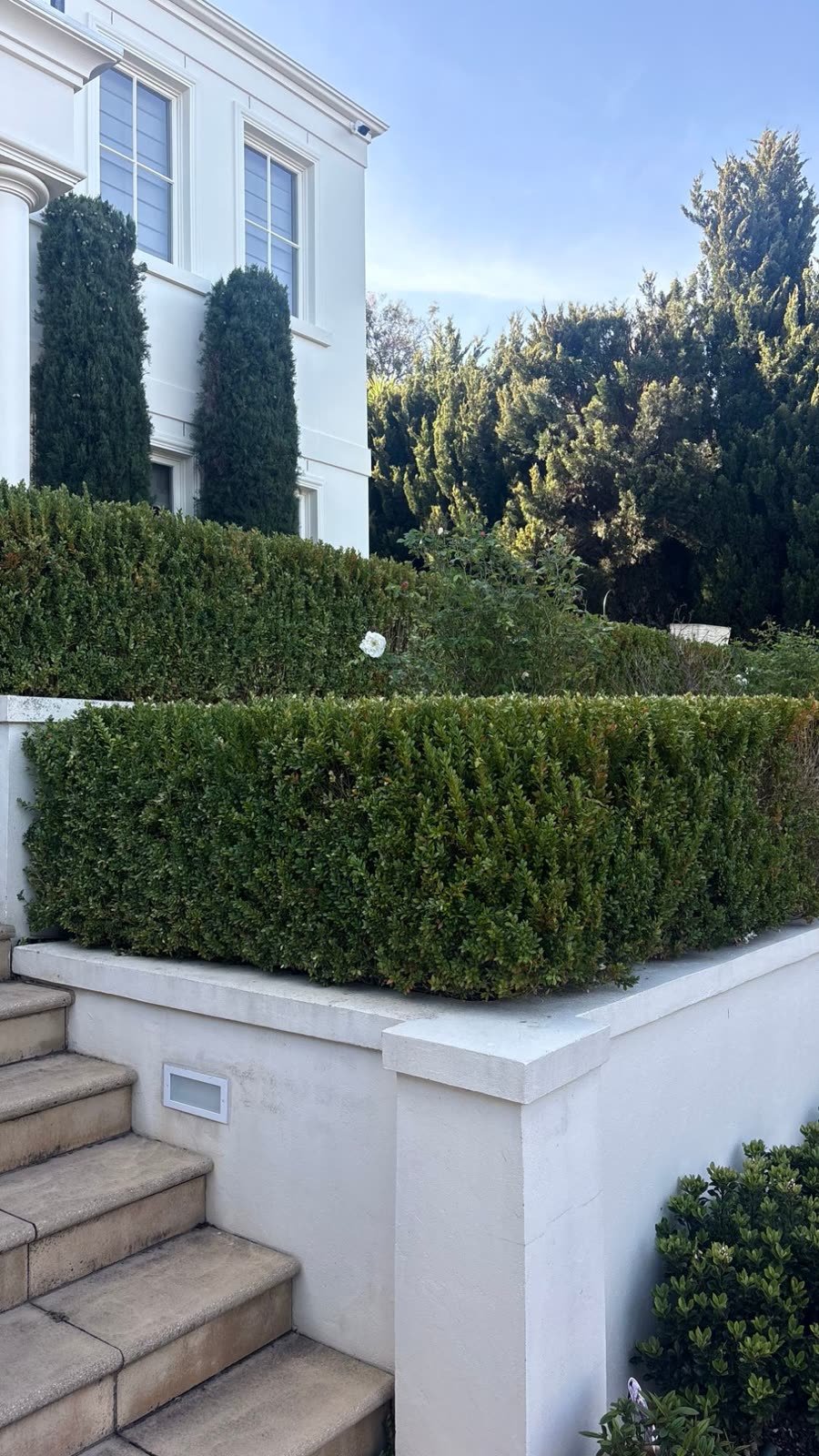 The finish we're after
What you need.
You probably own most of this already. The only thing you are likely buying is the string.
- Hedge trimmer. Petrol, battery or corded, whatever you have. Sharp blades matter more than brand. Already yours
- Builder's string line. Also sold as "brickie's line". Any tight, non-stretchy string works. ~$4 at any hardware store
- Two stakes. Garden stakes, star pickets, tomato stakes, or anything straight that stands taller than your hedge. $0 to $5 (see alternatives below)
- Line level (optional). A tiny spirit level that clips onto the string. A phone level app does the same job. ~$3, or a free app
- Tape measure. For matching the string height at both ends. Already yours
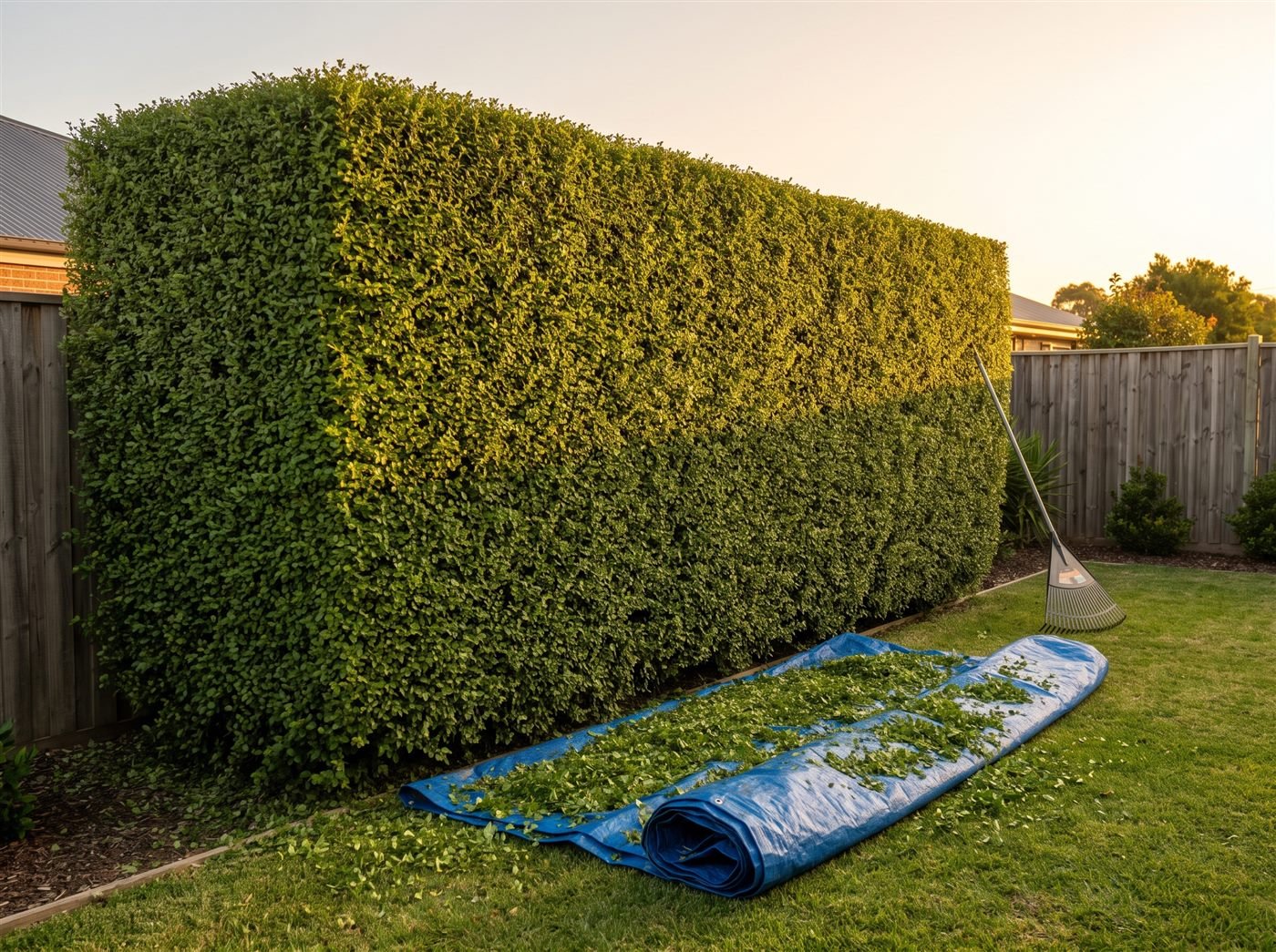
- Tarp or old sheet. Lay it under the hedge before you cut. Cleanup goes from an hour to a minute. Already yours
The whole trick, in one picture.
A string pulled drum-tight between two stakes gives you a perfectly straight, perfectly level line floating exactly where the top of your hedge should be. Instead of relying on your eye, which tends to drift, you cut to the line.
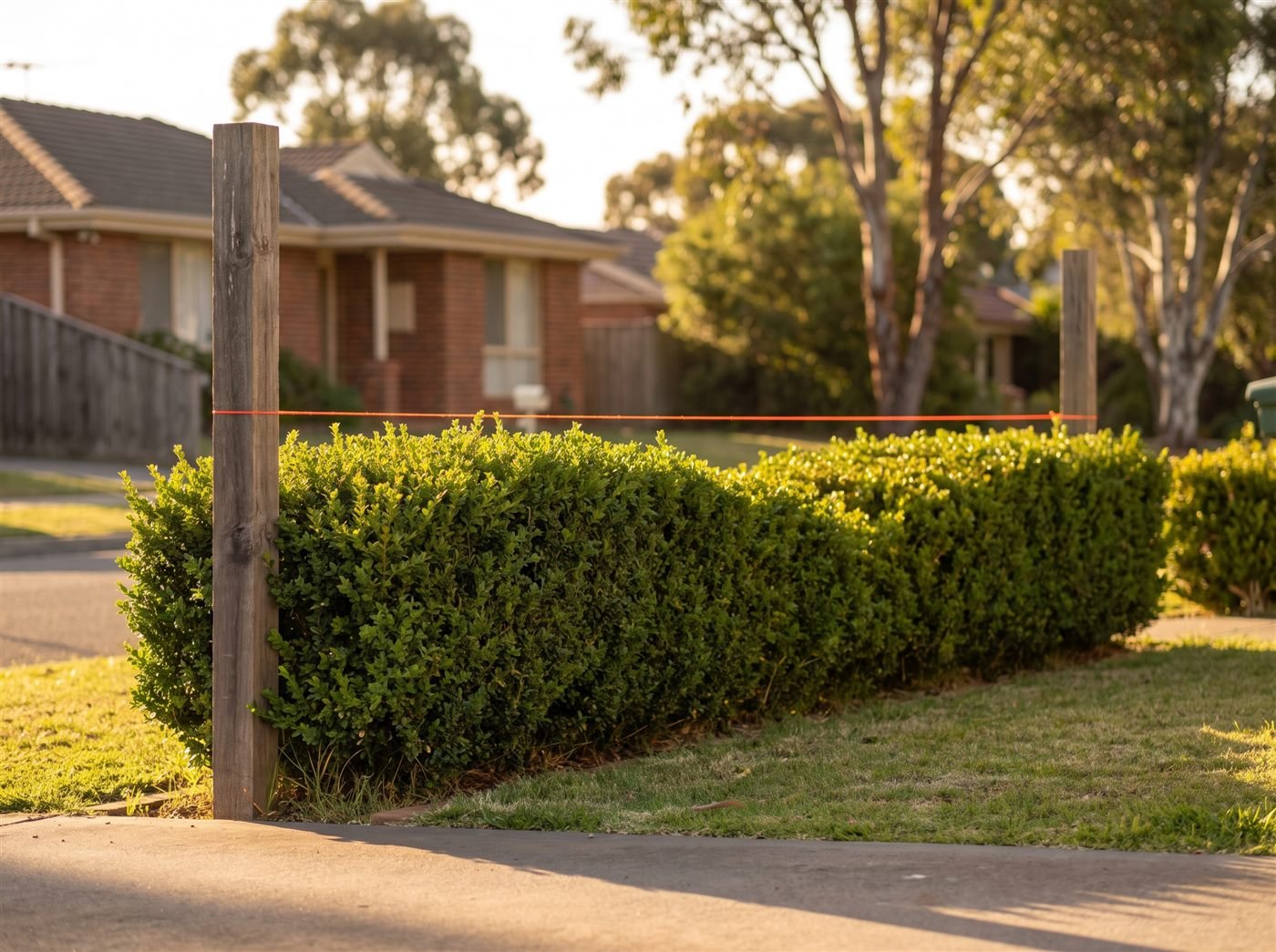
Six steps to a hedge that looks professionally cut.
Pick your height.
Walk the hedge and find the lowest dip along the top that you would be happy living with. That dip decides the height for the whole hedge, because you can always cut a hedge lower, but you cannot cut it higher. Setting the line above the lowest growth just leaves holes.
As a rule of thumb, taking off up to a third of the green growth in one go is safe for most hedges. Need to come down further? Do it over two seasons.
Set your stakes.
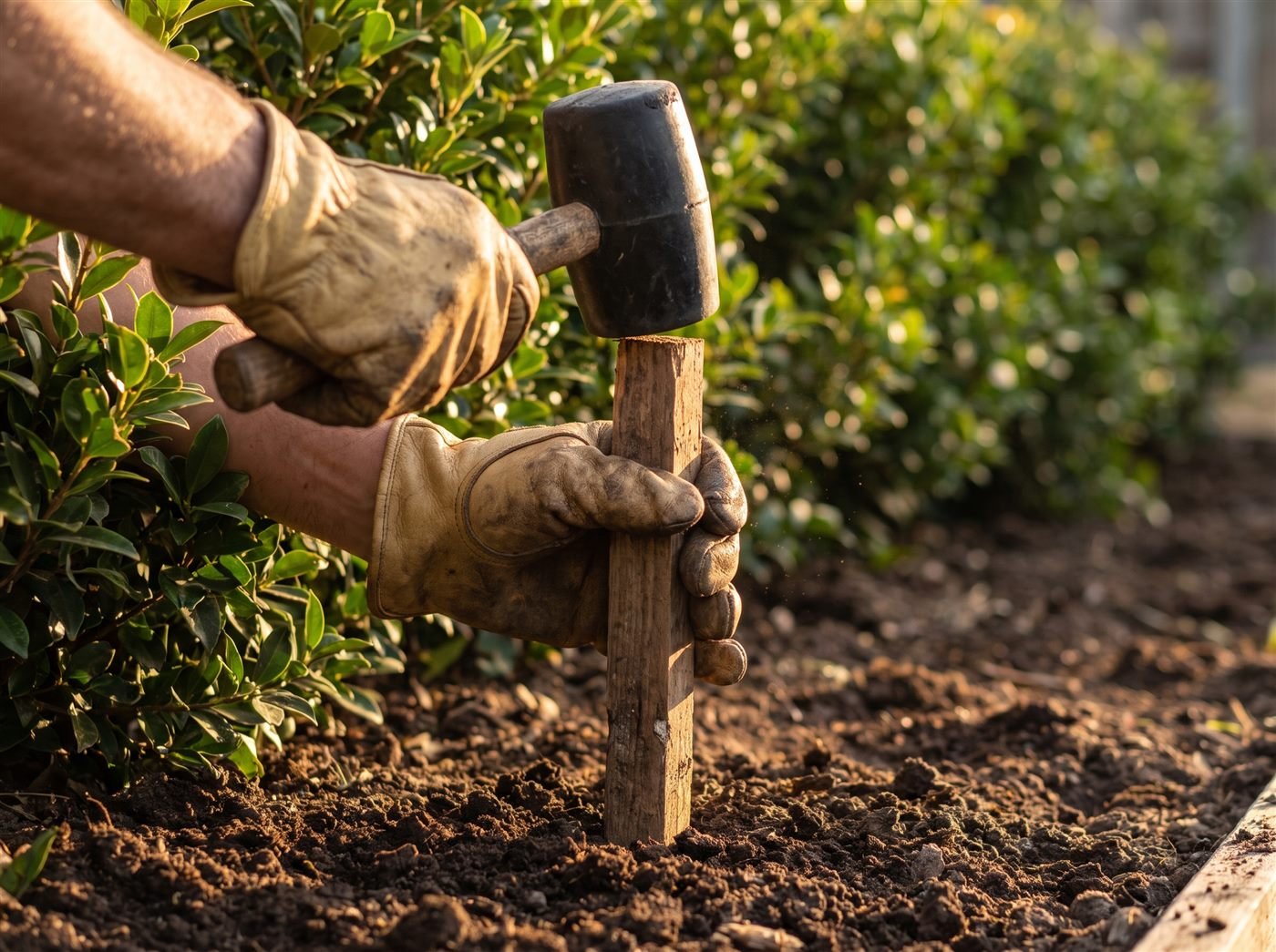
Drive a stake into the ground about 30 cm past each end of the hedge, so the string can run clear across the full length without snagging foliage. Push or hammer them deep enough that a tight string will not pull them over. About a hand-span into firm soil is enough.
The stakes must stand taller than your cutting height. For tall hedges, lash your stake to a star picket or use a longer piece of timber.
Run the string line.
Tie the string to the first stake at your chosen height. A couple of simple hitches will hold it. Walk to the other stake, pull the string drum-tight and tie it off at the same measured height from the ground. Tight matters: a saggy string gives you a saggy hedge.
Now make it level. Clip a line level onto the middle of the string, or lay your phone's spirit-level app along it, and nudge one end up or down until the bubble sits centred.
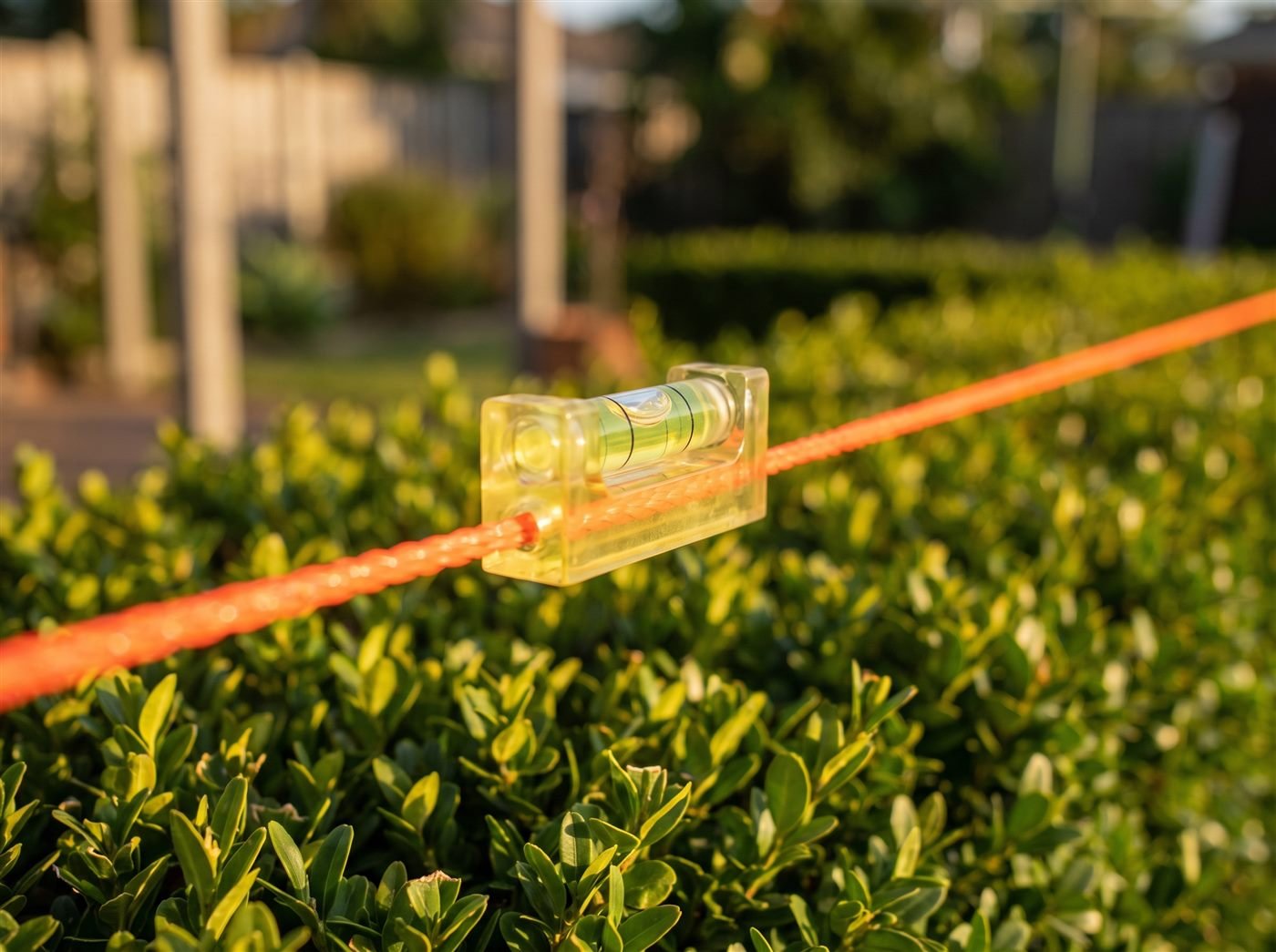
Cut the top.
Hold the trimmer bar dead flat and cut along the top, keeping the blade 5 to 10 mm above the string. Use slow, steady passes and let the blades do the work, never force or saw at it. Work from one end to the other, and step back every couple of metres to sight down the line.
Whatever happens, do not cut the string. It is your reference for the whole job, and a flicked string line leaves a flicked hedge line.
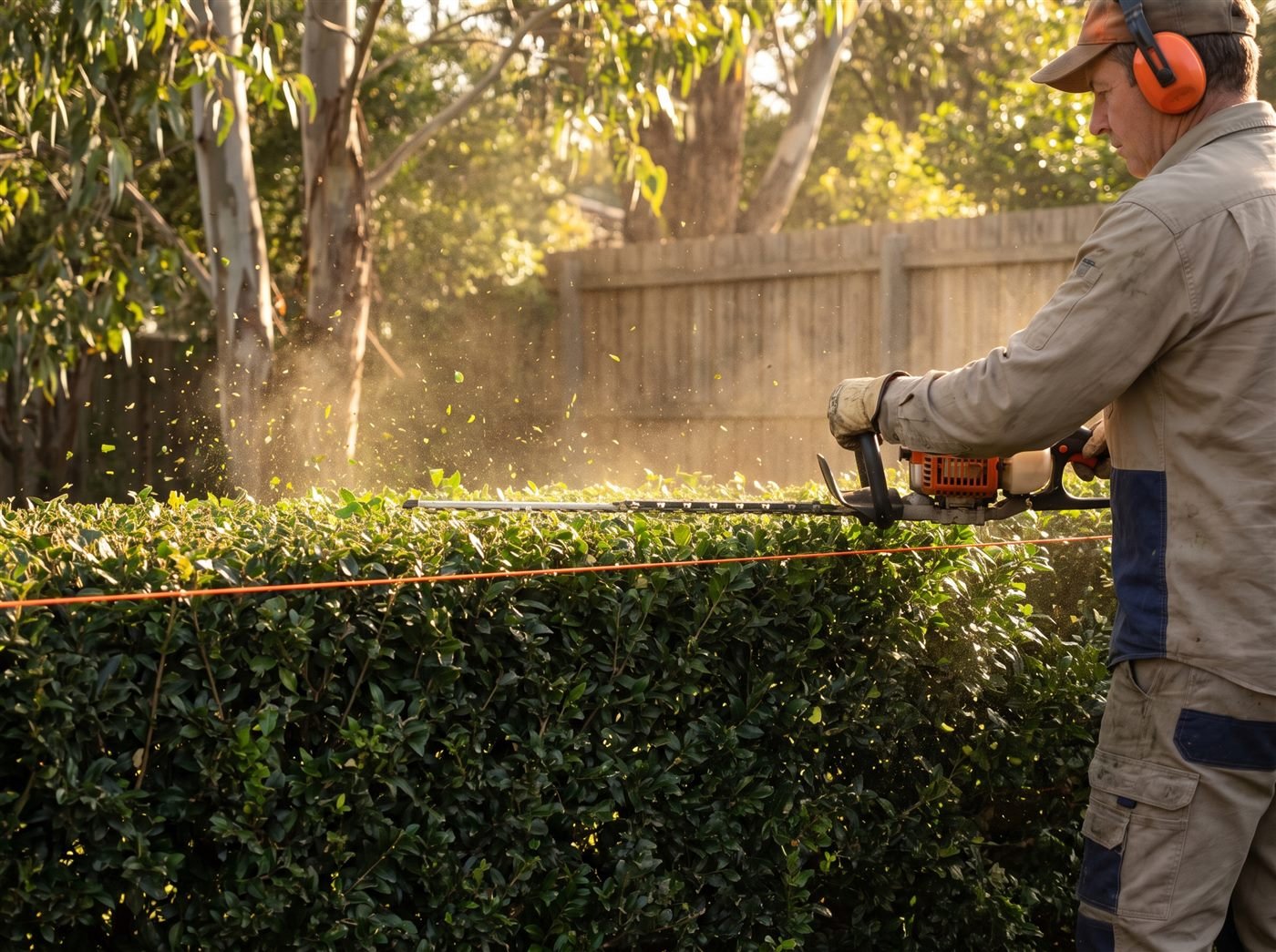
Square the faces.
For the front and back, cut with long, sweeping strokes from the bottom upward, keeping the bar flat against the face. Want the faces laser-straight too? Move a stake out from each end of the face, run the string along the face at chest height, and cut to it exactly like the top.
One thing the pros always do: leave the base slightly wider than the top, with a lean of just 5 to 10 degrees, called a batter. It lets sunlight reach the bottom of the hedge, which is the difference between a hedge that is green to the ground and one that goes bald at the ankles.
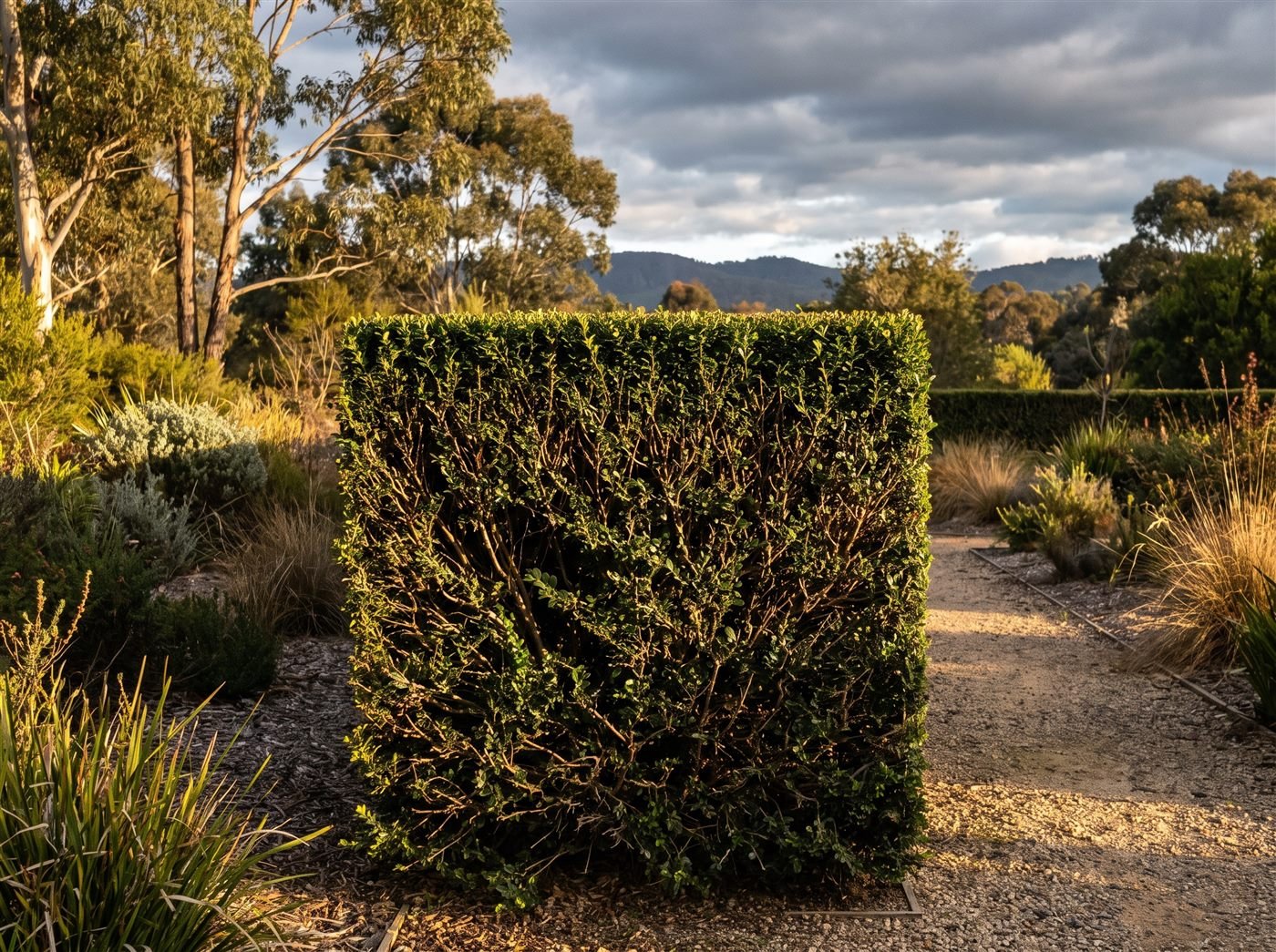
Finish and clean up.
Pull the loose clippings off the top of the hedge. If left there, they brown off and spoil the look within days. Snip any thick stragglers the trimmer tore rather than cut with secateurs, so they heal clean. Then roll up the tarp, pack down the stakes, and wind the string back on its winder for next time.
Step onto the footpath and look down the line.
Don't have the gear? Use these instead.
No stakes?
A broom handle, an old fence paling, a length of poly pipe, a star picket, even a chair leg zip-tied to something solid. Anything straight and taller than the hedge that will hold a tight string. For low box hedges, two bricks with the string wedged under them can do the job.
No line level?
Every phone has a free spirit-level app (iPhone: the Measure app; Android: search "bubble level"). Rest the phone gently along the string, or against a straight batten held under the string. Old-school option: a clear garden hose nearly full of water, because the water level at each end is always dead level.
No string at all?
Clamp or hold a straight timber plank or box level along the top of the hedge and cut along it like a fence. Slower, since you re-set it as you move, but the finish is just as sharp. Painters' masking tape stretched tight can also work on short runs.
Hedge too tall to reach?
A stable platform ladder is much safer than a lean-against ladder, as you need both hands for the trimmer. If you are cutting above shoulder height off a ladder, honestly, that is the point where it is worth calling someone insured.
Five things the pros do that nobody tells you.
- Cut on a dry, overcast day. Wet leaves clog blades and tear; harsh sun browns fresh cuts on some species.
- Sharp blades, always. A blunt trimmer bruises and rips instead of slicing. Torn tips go brown in a week and undo your work.
- Take a third, no more. Cutting past the green into old bare wood is how hedges end up patchy for a year. Come down in stages.
- Timing beats technique. Most formal hedges want a main cut in late spring and a tidy in late summer or early autumn. Skip hard cuts in the heat of January and the frost of July.
- Check for nests first. Spring hedges are full of them. Give the hedge a look and a shake before the blades go anywhere near it.
Rather not spend your Saturday on a ladder?
Fair enough. Hedge trimming is what I do, with string lines, sharp blades and every clipping taken away, across Geelong, the Bellarine and the Surf Coast. Same-day reply, one written quote.
Get a hedge quote