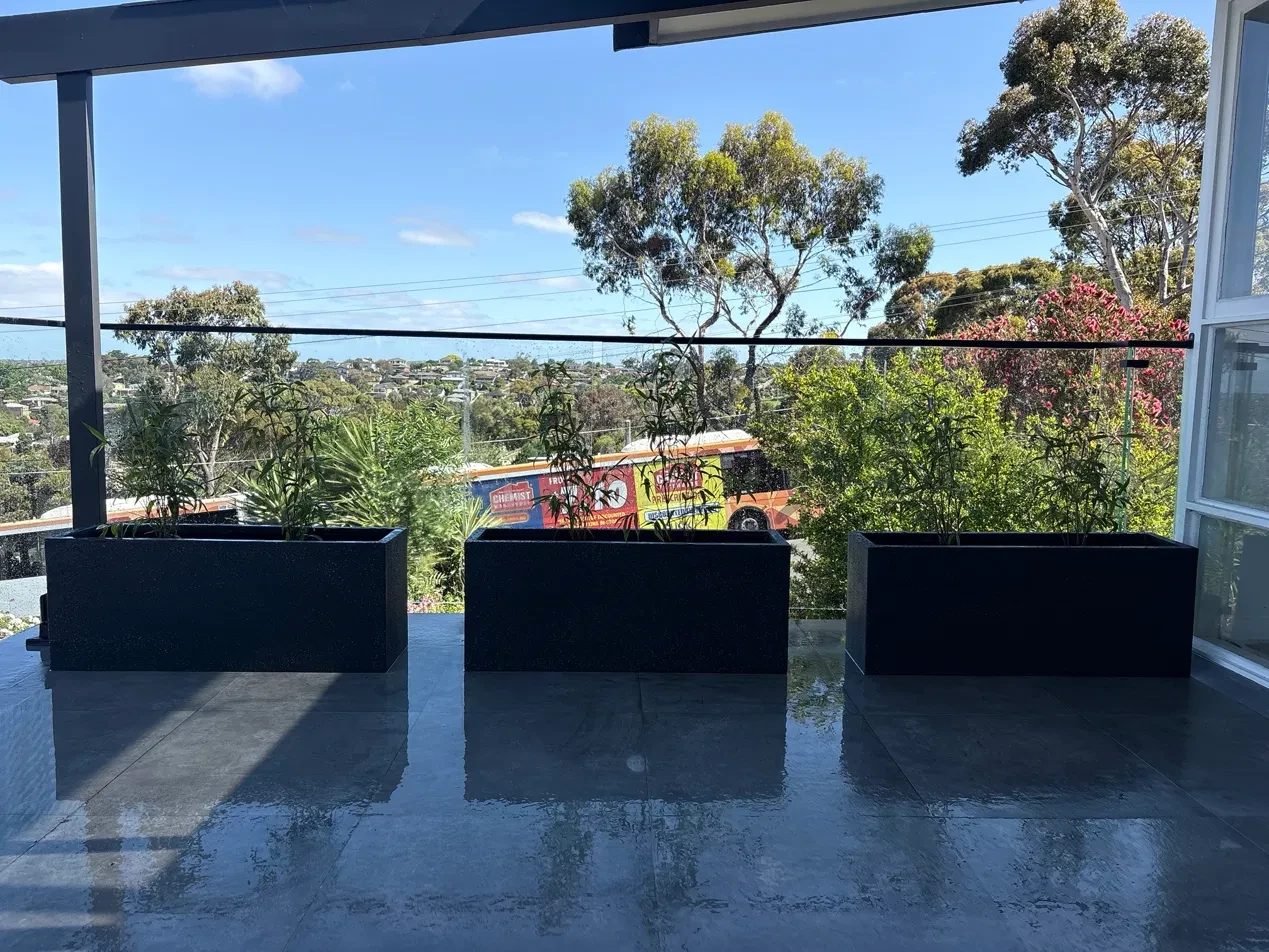
A raised bed is the easiest way to grow well around Geelong. You skip our heavy clay, you choose the soil the roots sit in, and everything is at a height you can reach without kneeling. This guide follows a real job: three black planter troughs on a balcony, set up, filled and planted with bamboo in one morning. The same six steps work for a timber sleeper bed in the backyard or a single pot by the door.
I do this for a living, so I will tell you where people go wrong as well as what to do. Most raised beds that fail do so for one of three reasons: no drainage, cheap soil, or the wrong plant for the spot. All three are easy to get right on day one.
What you need
1Choose the right bed
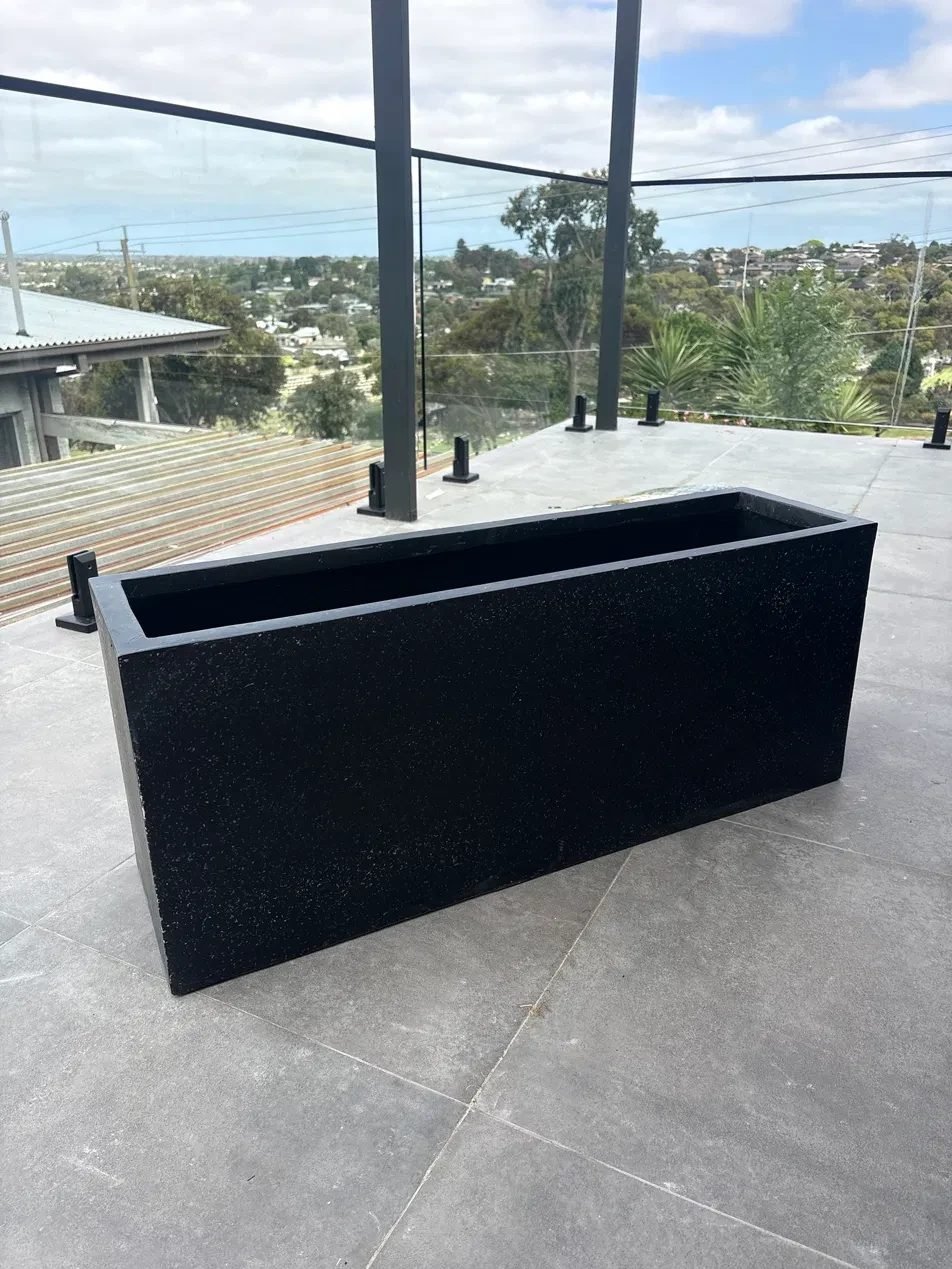
Depth matters more than anything else. Salad greens and herbs are happy in 300 mm. Shrubs, bamboo and anything you want to grow tall need 400 mm or more, because the deeper the mix, the longer it holds water on a hot day. The troughs in this job are about a metre long and 400 mm deep, which is the sweet spot for a screening plant.
Turn the bed over and check for drainage holes before you buy. If there are none, drill four or five 10 mm holes in the base. Lightweight concrete and fibreglass troughs like these look like stone but two people can carry them empty. Timber sleepers are the cheapest way to build a big bed in the ground, and treated pine will last well over ten years if the inside is lined with builder's plastic.
2Put it in place while it is empty
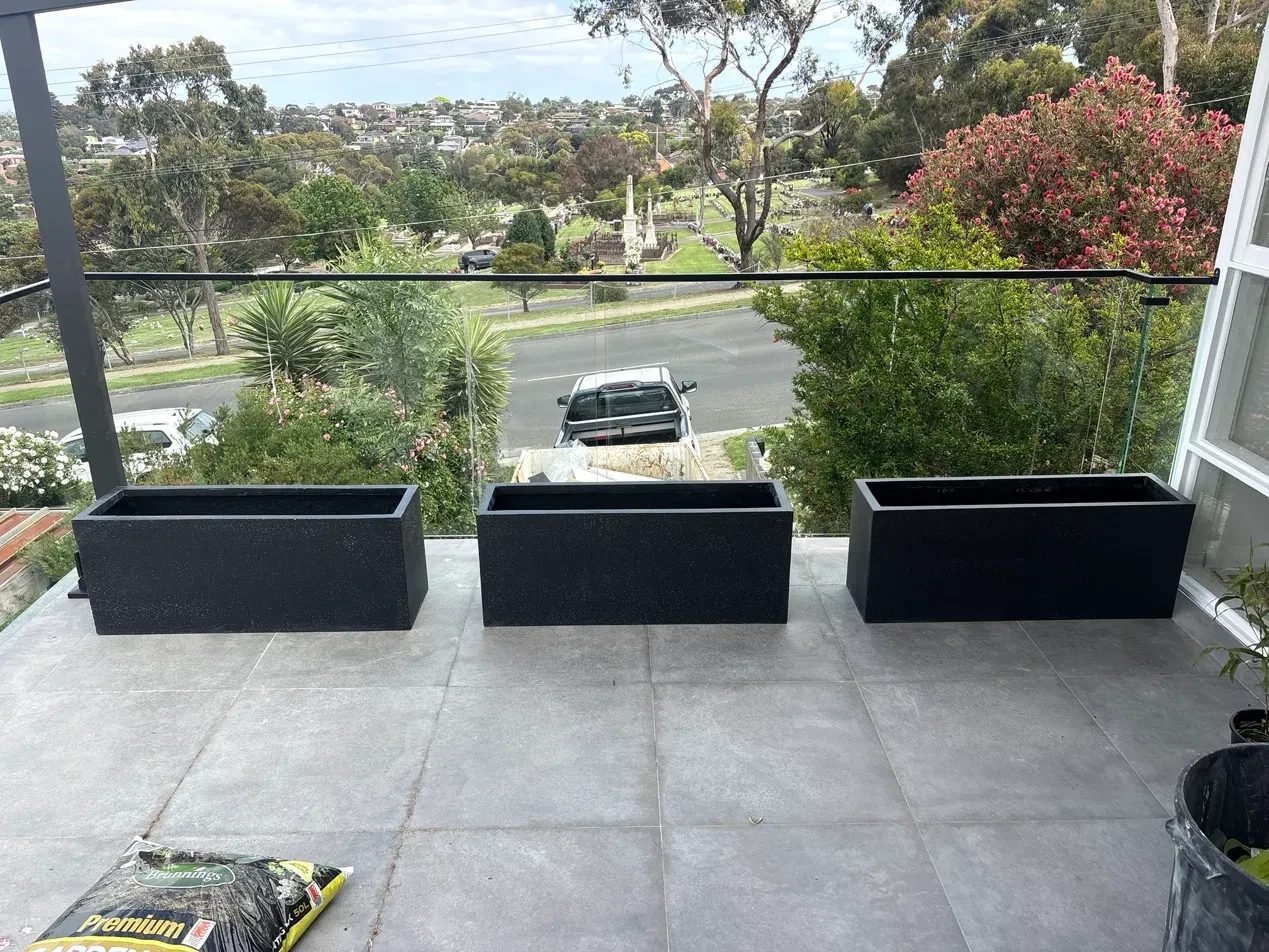
Decide exactly where each bed will live before a single bag goes in, because you will not be moving it afterwards. Line them up, even out the gaps, and step back to check it looks right from where you will see it most, which on a balcony is usually from inside through the glass.
Sit each bed on pot feet or risers so water can run out of the drainage holes and away. Water trapped under a planter stains tiles and rots timber decking. If the balcony cannot drain at all, put a wide saucer under each planter and empty it after heavy rain.
3Fill it with a proper planting mix
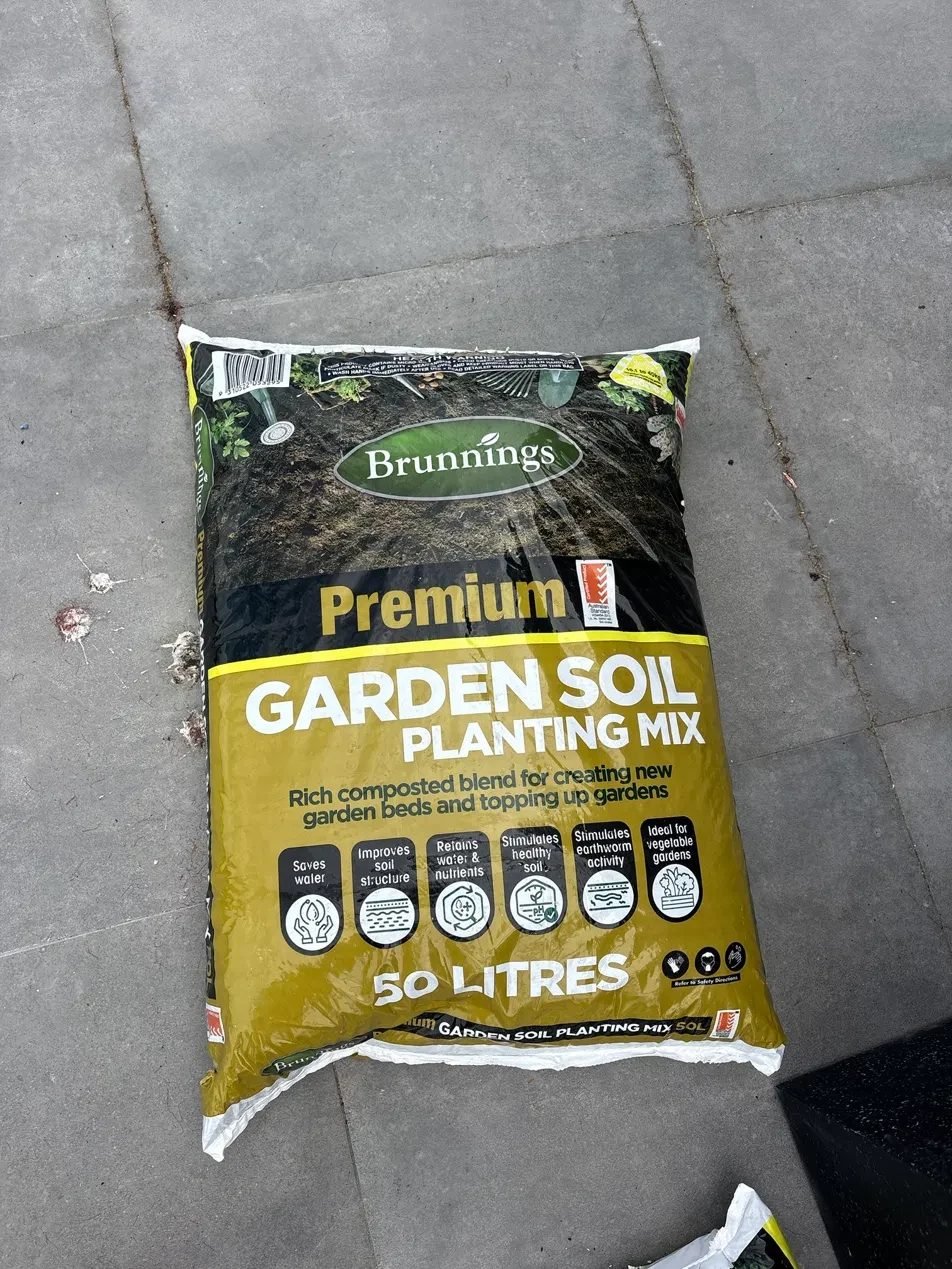
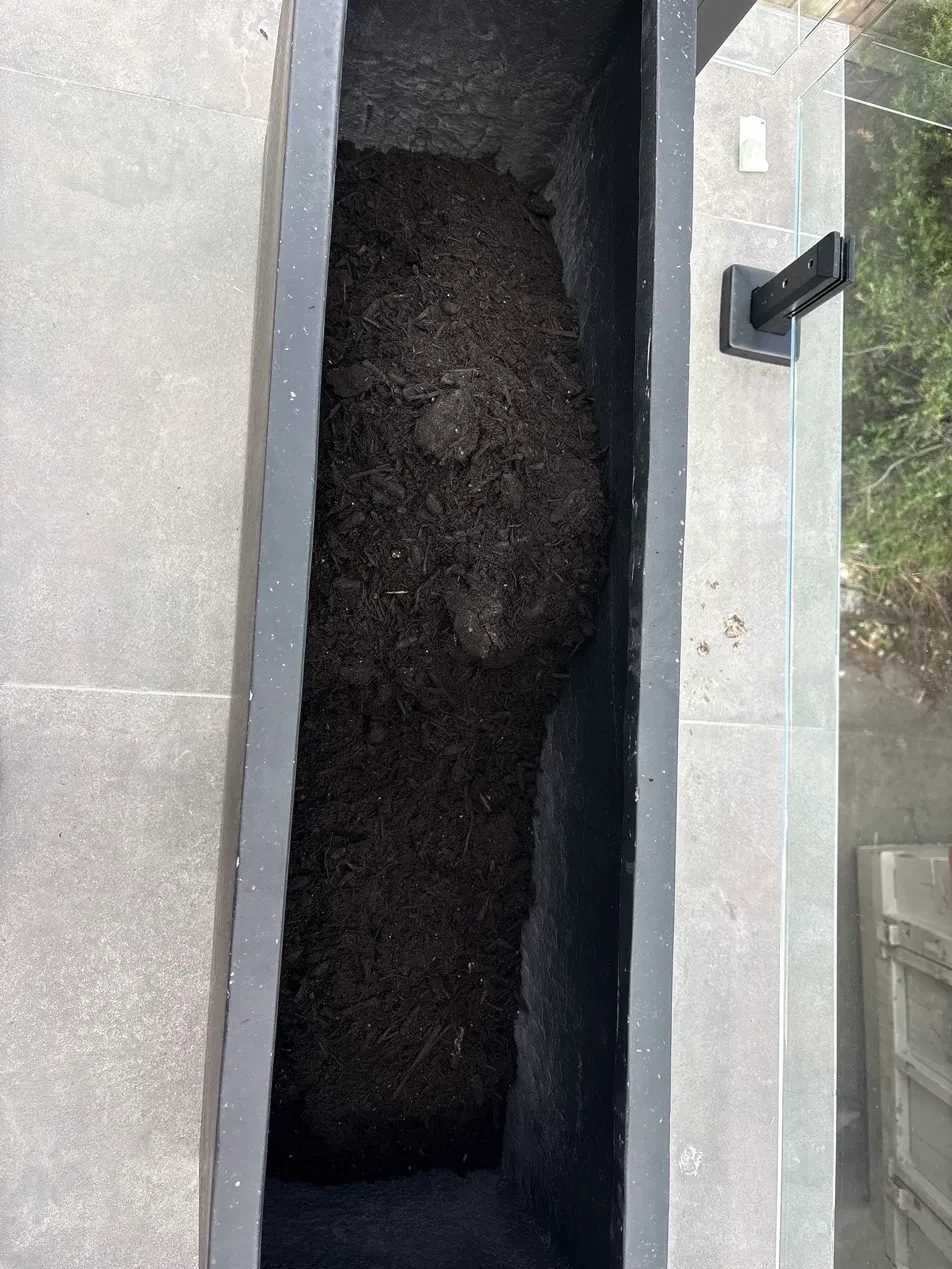
This is where most of the money goes and where most people try to save it. Do not fill a raised bed with soil dug out of the yard, which turns to concrete in a planter, and do not use the cheapest potting mix on the shelf, which collapses and goes hydrophobic within a season. Use a premium garden soil planting mix, a composted blend made for new beds. For this job it was Brunnings Premium Garden Soil Planting Mix in 50 litre bags.
Skip the old advice about a gravel layer in the bottom. It does the opposite of what people think: water pools in the mix above the gravel instead of draining through it. Mix all the way down, drainage holes and feet underneath, is what works.
4Choose plants that suit the spot
Match the plant to the sun, the wind and the depth you have, in that order. This balcony wanted privacy from the street without blocking the view, so the pick was a clumping bamboo, two plants per trough. Clumping bamboo stays where you put it, is evergreen, copes with wind and makes a soft green screen within a year. A running bamboo would push through the trough and the balcony in a couple of seasons, which is why it is never the answer.
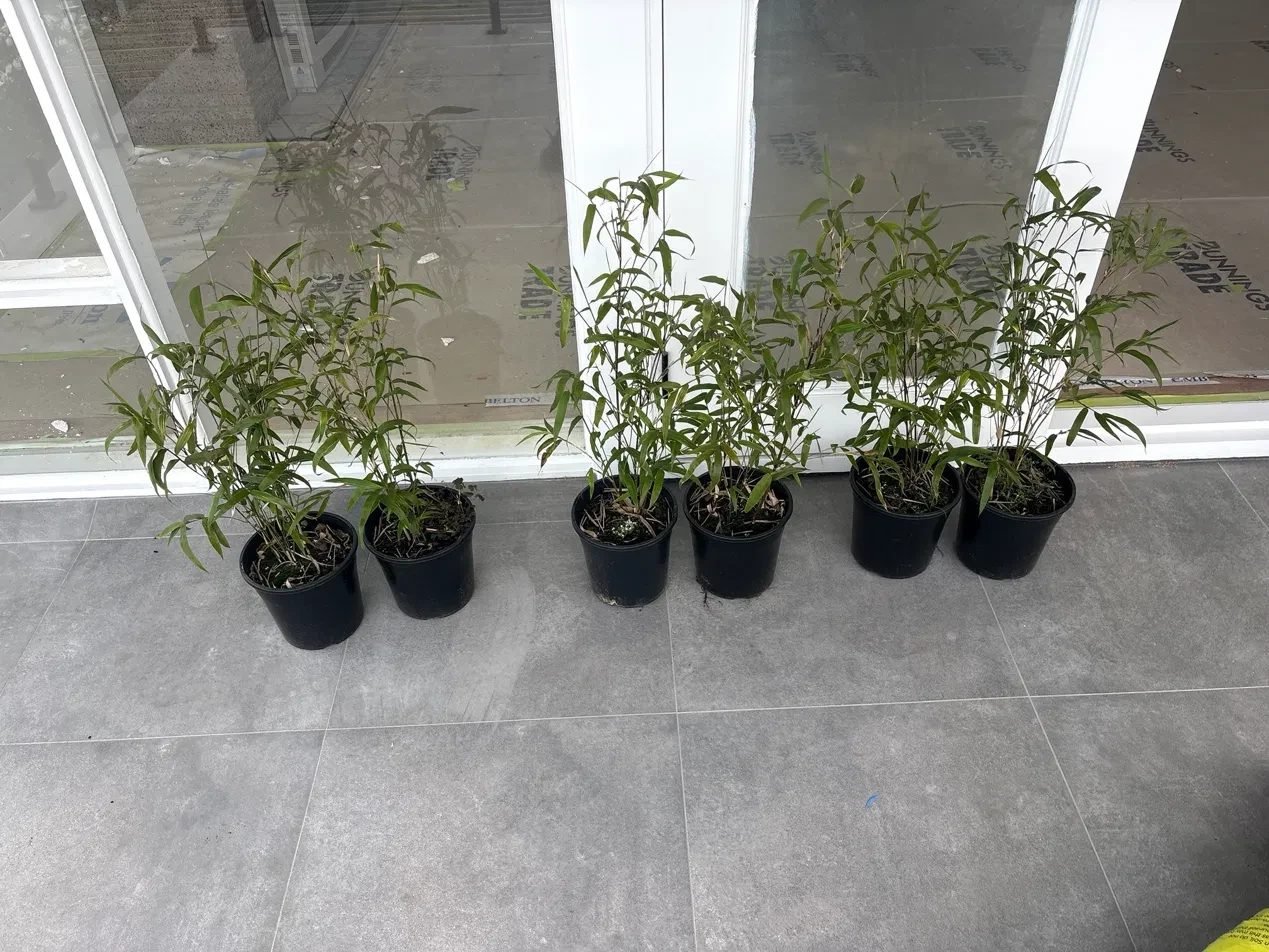
There is a full list of what works in Geelong raised beds further down, grouped by what you want the bed to do.
5Plant them
- Water the pots first. A dry root ball slides out cleanly and takes up water once it is in. A bone-dry one can stay dry for weeks even in wet mix.
- Squeeze the pot and ease the plant out by the base, never by the stems.
- Tease the roots. If they are circling the pot, pull a few free with your fingers or slice the outside of the root ball with a knife in three or four places. It feels brutal and it is the best thing you can do for the plant.
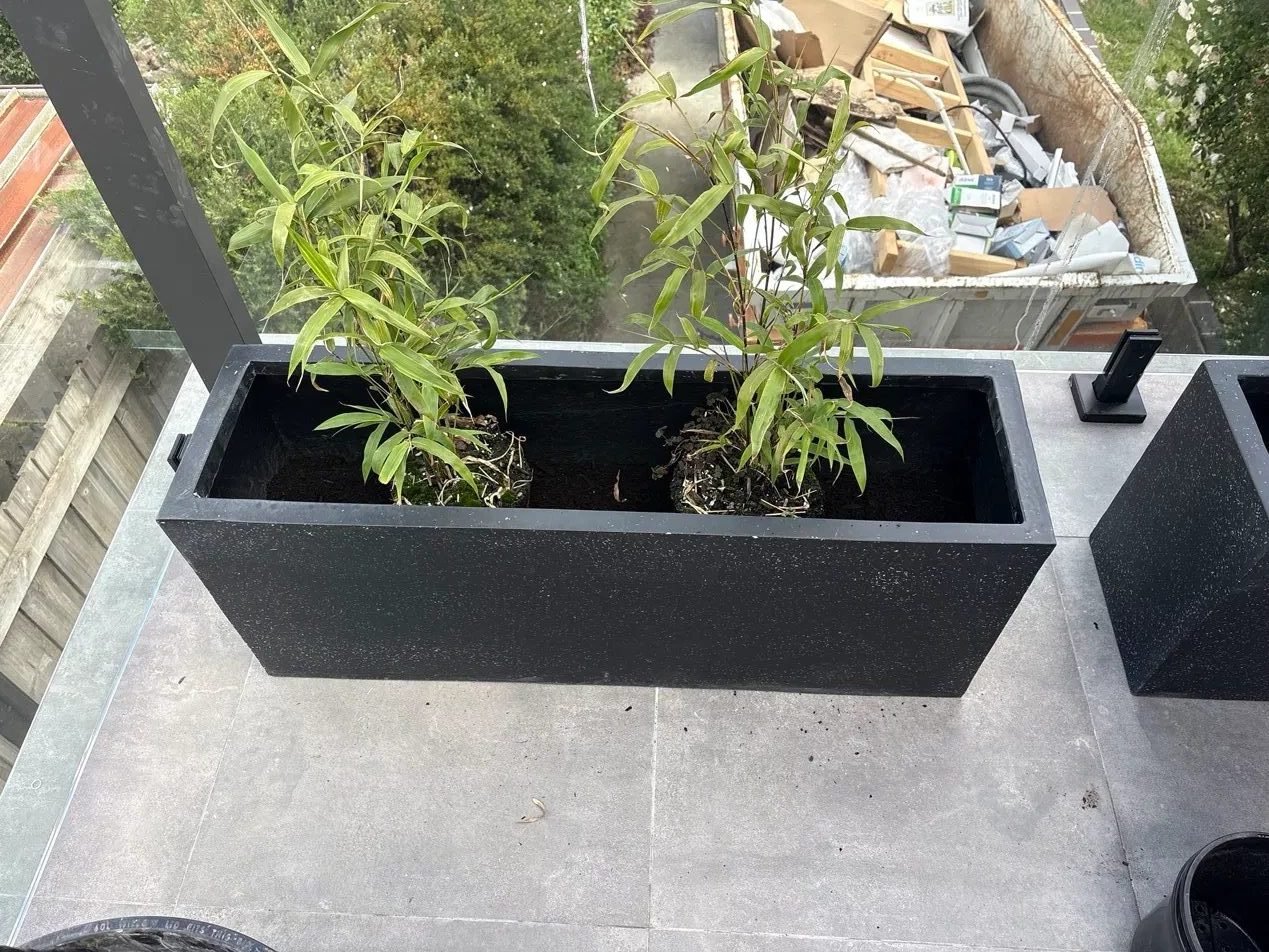
- Set it at the right height. The top of the root ball sits level with the finished mix, not buried. Burying stems is the quickest way to kill most shrubs.
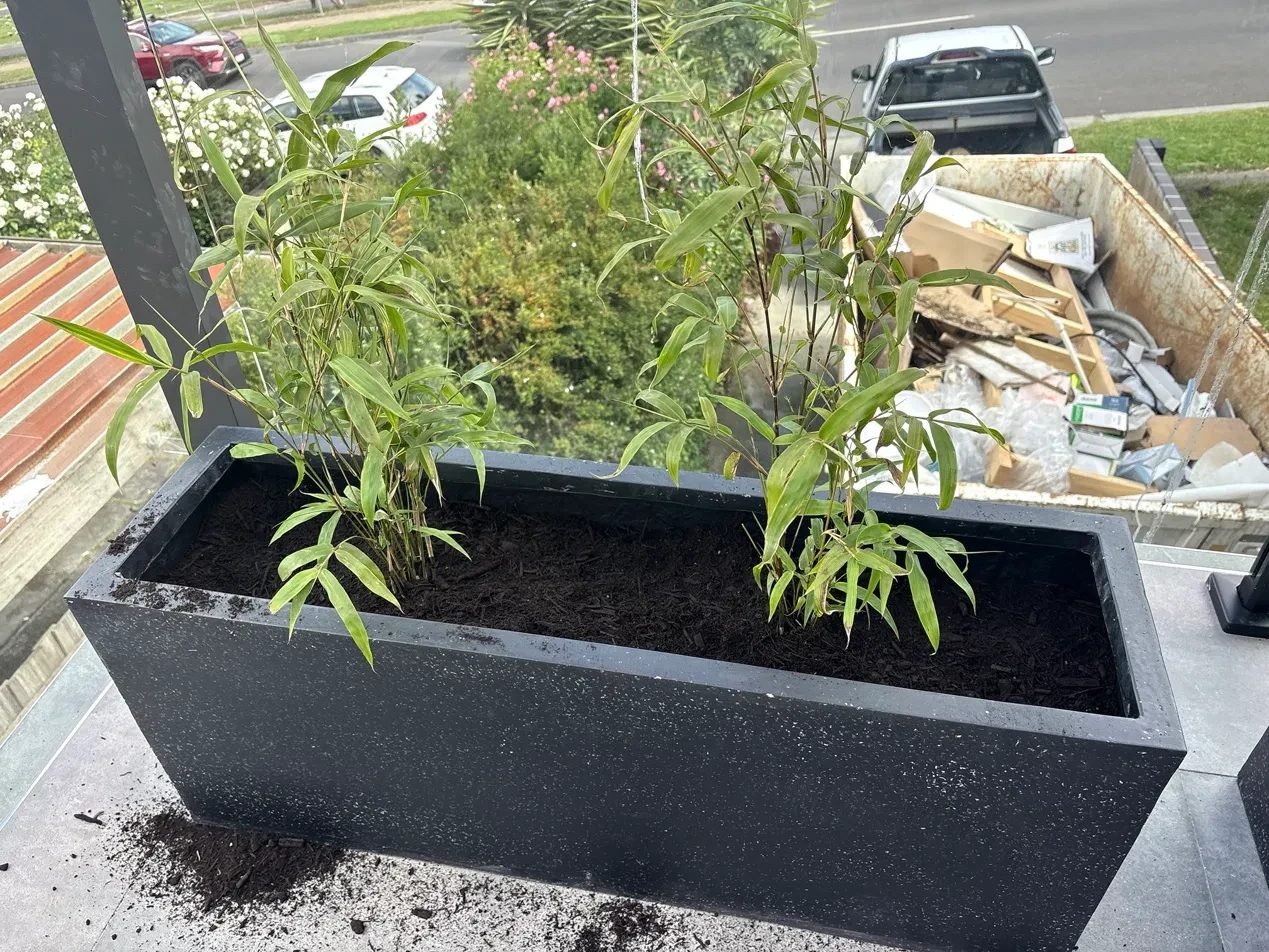
- Backfill and firm gently with your hands so there are no air pockets, then top up to 30 to 40 mm below the rim.
6Water in and mulch
Water slowly and deeply until it runs out of the base. That first soak settles the mix around the roots and gets rid of air pockets, and no amount of light sprinkling replaces it. Then mulch 30 to 50 mm deep with fine bark or pea straw, kept clear of the stems. Mulch is what gets a planter through a 38 degree Geelong afternoon.
Looking after it
- First two weeks: water every day. The plants are living off their old root ball until new roots push into the mix.
- Summer: every two to three days, more on a windy balcony. Planters dry out far faster than garden soil. Push a finger in to the second knuckle; if it is dry, water.
- Winter: once a week or less. Overwatering in winter kills more planter plants than drought does.
- Feeding: a slow release fertiliser in spring and again in late summer. Bamboo is hungry and thirsty, so give it both generously and it will reward you.
- Tidying: cut any dead or spindly canes out at the base and bamboo thickens up. For shrubs, a light trim after flowering keeps them dense.
What to plant in a raised bed in Geelong
Geelong gives you hot dry summers, cold wet winters and wind off the bay, so the plants below are chosen because they handle all three in a planter. Pick the group that matches what you want the bed to do, and give every plant at least six hours of sun unless it says otherwise.
Screening and privacy
- Clumping bamboo such as slender weavers (Gracilis). Fast, evergreen, soft. Clumping only, never running.
- Lilly pilly 'Resilience', a tough native hedge that clips well and shrugs off wind.
- Sweet viburnum (Viburnum odoratissimum) for a dense glossy screen in a bigger bed.
- Murraya for a formal, fragrant hedge in a sheltered sunny spot.
Low fuss natives
- Westringia (coastal rosemary), the hardiest grey-green shrub for wind and salt.
- Lomandra 'Tanika' and dianella, strappy and tidy all year with almost no care.
- Correa for winter flowers the birds like, happy in part shade.
- Grevillea 'Bronze Rambler' to spill over the edge of a tall planter.
Mediterranean and coastal
- Rosemary and lavender, both love a free draining planter in full sun.
- Dwarf olive for a silver accent plant that handles heat and wind.
- Agave or yucca for a modern look that needs water about once a fortnight.
- Star jasmine on a trellis behind the bed for scent and cover.
Something to eat
- Herbs: rosemary, thyme, oregano, parsley and chives. Keep mint in its own pot or it takes over.
- Salad greens and spinach from autumn to spring, when Geelong is mild.
- Cherry tomatoes and chillies over summer, with a stake in from day one.
- Strawberries along the front edge, where they can hang over the rim.
For colour
Salvias flower from spring to autumn and cope with heat, kangaroo paw gives height and bird life, and geraniums (pelargoniums) are the toughest colour you can put in a sunny planter. Mix one tall, one bushy and one trailing plant per trough and it always looks designed.
Mistakes to avoid
- No drainage. A planter with no holes, or holes sitting flat on the tiles, becomes a bucket and the roots rot.
- A gravel layer. It traps water in the mix above it. Mix all the way down.
- Cheap mix or yard soil. Both compact, repel water and starve the plants within a season.
- Planting too deep. Root ball level with the surface, every time.
- Running bamboo. It will leave the planter and keep going. Clumping bamboo only.
- Forgetting the wind. Balconies and corners near the bay dry out twice as fast. Mulch, and water more often than you think.
- Overcrowding. Plants look small on day one. Space them for the size on the label and the bed fills in on its own.
Raised bed questions
How deep should a raised garden bed be?
At least 300 mm for herbs, salad greens and most vegetables, and 400 mm or more for shrubs, screening plants and bamboo. The deeper the bed, the longer it holds water in summer.
Do I need a gravel layer in the bottom?
No. Gravel makes drainage worse, because water sits in the mix above it. Drainage holes, feet or risers underneath, and planting mix all the way down is what works.
How much soil do I need?
Length x width x depth in metres, times 1000, gives litres. A trough 1 m by 0.4 m by 0.4 m is about 160 litres, so three to four 50 litre bags, a little less once the plants go in.
Can bamboo go in a planter box?
Yes, as long as it is a clumping type such as slender weavers (Gracilis). Give it a deep planter, plenty of water and a feed in spring. Never plant a running bamboo in a bed or planter.
How often should I water it?
Daily for the first fortnight, then every two to three days through summer and much less in winter. Planters dry out faster than the ground, so check with a finger first.
Want it built, filled and planted for you?
I build and plant raised beds and planters around Geelong, from a single balcony trough to a backyard of sleeper beds. One written quote, free, same-day reply.